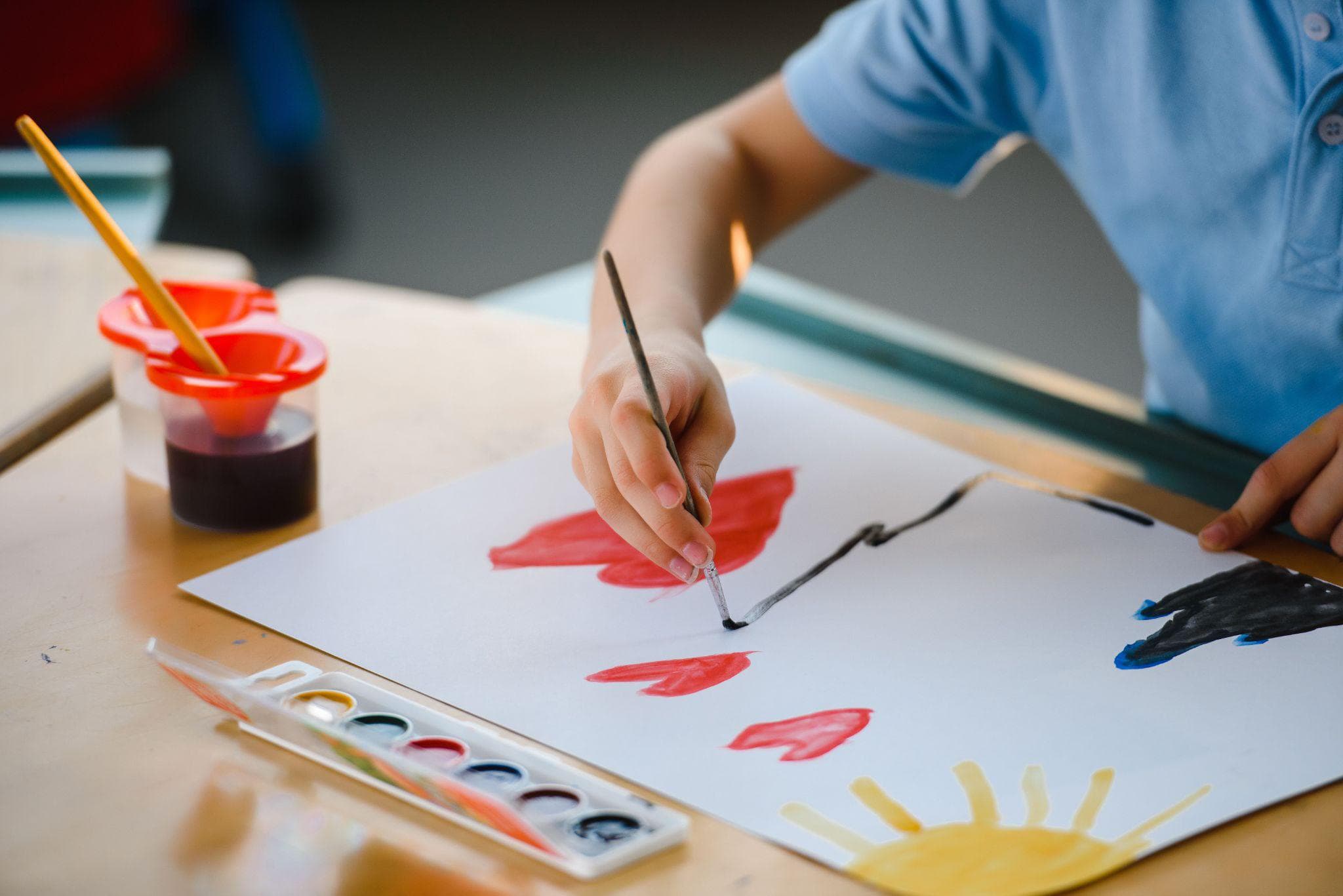
Art Lessons at Ontario’s Professional School of Music & Arts: Why Children Need Art Classes
When parents look for art lessons for their child, they usually picture something fairly straightforward: paints, brushes, paper, a few beautiful drawings to take home, and perhaps a little less time on the tablet.
But good art classes work a little differently.
A child might come to their first lesson without having any idea what to draw. They might look at a classmate’s work and try to copy it exactly. They might get frustrated because a line turned out crooked or the color wasn’t “quite right.” But a few months later, that same child is already choosing for themselves where to start, which colors to mix, and what to change if the drawing isn’t going according to plan. Families looking for hands-on visual arts programs can learn more about Art Classes for Kids at OPSMA.
It’s precisely these changes that are often more interesting than the finished painting.
At Ontario’s Professional School of Music & Arts, art classes are designed for children starting around age five. Lessons take place in small groups, where the teacher can help each child, yet the atmosphere remains lively: children see each other’s work, exchange ideas, and gradually become more confident in their own decisions.
Not every drawing has to be “perfect.”
Adults notice mistakes very quickly.
The house is crooked. The person is too big. The tree is a strange color. The shadow is drawn on the wrong side.
A child’s logic is different.
He might paint the sky orange simply because he likes it that way. He might draw a cat the size of a car. He might add a flying dragon to an ordinary landscape, even though the teacher originally showed a completely different example.
And here, it’s important not to rush to correct everything.
Art lessons shouldn’t turn into an exercise in copying the teacher’s work. Of course, children learn specific skills: how to hold a brush, how to mix colors, how to see shapes, and how to work with proportions. But there’s a big difference between “teaching” and “doing it for the child.”
Sometimes a child’s work becomes more interesting precisely because of a mistake.
Paint accidentally runs—a lake appears. A line veers off course—it turns into a branch. A color turns out too dark—it can be used for shading.
Gradually, the child stops perceiving every imperfection as a disaster.
This is a useful skill that extends far beyond the art classroom.
In a group setting, children learn to observe, but not necessarily to copy
One of the interesting things about group art lessons is that children constantly see that the same assignment can be approached in different ways.
The teacher might ask them to draw an autumn tree.
One child will draw a bright red canopy. Another will choose shades of yellow and brown. A third will unexpectedly depict evening and add a dark blue sky.
And all three pieces can be successful.
For young children, this is an important discovery. At school, there is often only one “correct” answer. In an art class, there can be several answers.
At the same time, the group provides an opportunity to learn from one another in a natural way.
A child notices an interesting technique used by a classmate. They see how another student mixed two colors. Sometimes they ask, “How did you do that?”
This is how communication arises—without adults having to organize it.
This is especially helpful for shy children. They don’t have to actively talk to the whole group right away. They can simply work nearby, observe, gradually get used to the environment, and join in when they feel comfortable.
Why Art Lessons Are Beneficial for Children Who Get Frustrated Easily
Some children react very strongly when something doesn’t work out the first time.
If they draw a circle that’s not perfectly round, they’re ready to start over.
If they smudge the paper, the work is ruined.
If they can’t replicate the example, they say, “I can’t draw.”
In art classes, situations like these come up all the time—and that’s exactly where the benefit lies.
It’s impossible to control paint completely. A pencil sometimes leaves a line that’s too dark. Watercolors don’t behave the way a child expected.
Gradually, they come to understand that they can keep working on their piece.
They don’t have to throw the paper away.
Sometimes the teacher simply asks, “What can we do with this part?”
It’s a small question, but it changes one’s attitude toward mistakes.
Instead of thinking “it’s all ruined,” the child begins to look for a solution.
For a child, this is much more beneficial than if an adult quickly fixes the problem for them every time.
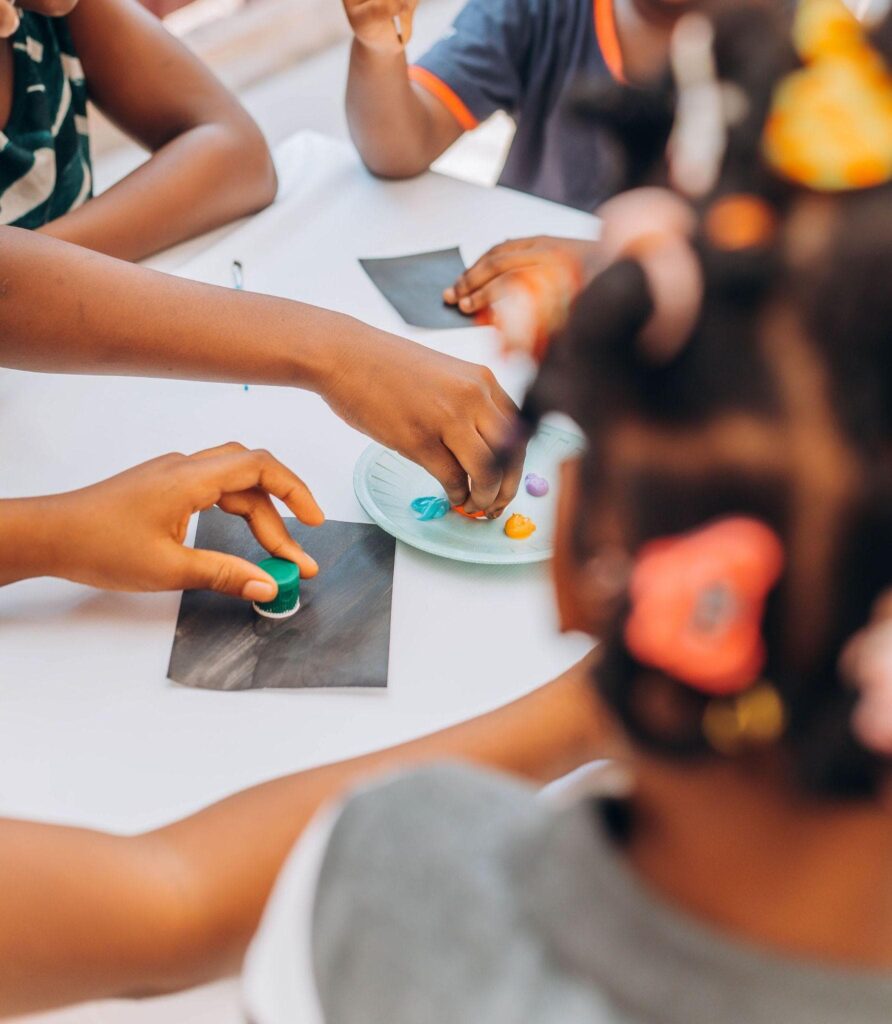
Drawing isn’t just about talent
Some parents think that art lessons are only for children who are already good at drawing.
In reality, it’s almost the opposite.
If a child loves to draw, these classes introduce them to new techniques and ideas.
If drawing is still a struggle, regular lessons help them stop comparing every piece of work to a picture from the internet and start seeing their own progress.
Talent at five or six years old is actually quite difficult to measure.
One child draws very neatly because they love details. Another works quickly and boldly but still has trouble controlling their lines. A third isn’t particularly interested in realistic images but is constantly coming up with their own stories.
Which of them is more “talented”?
It doesn’t always make sense to ask that question.
It’s much more interesting to see what changes after a year of regular classes.